How a mug is made, from a ball of clay to your kitchen
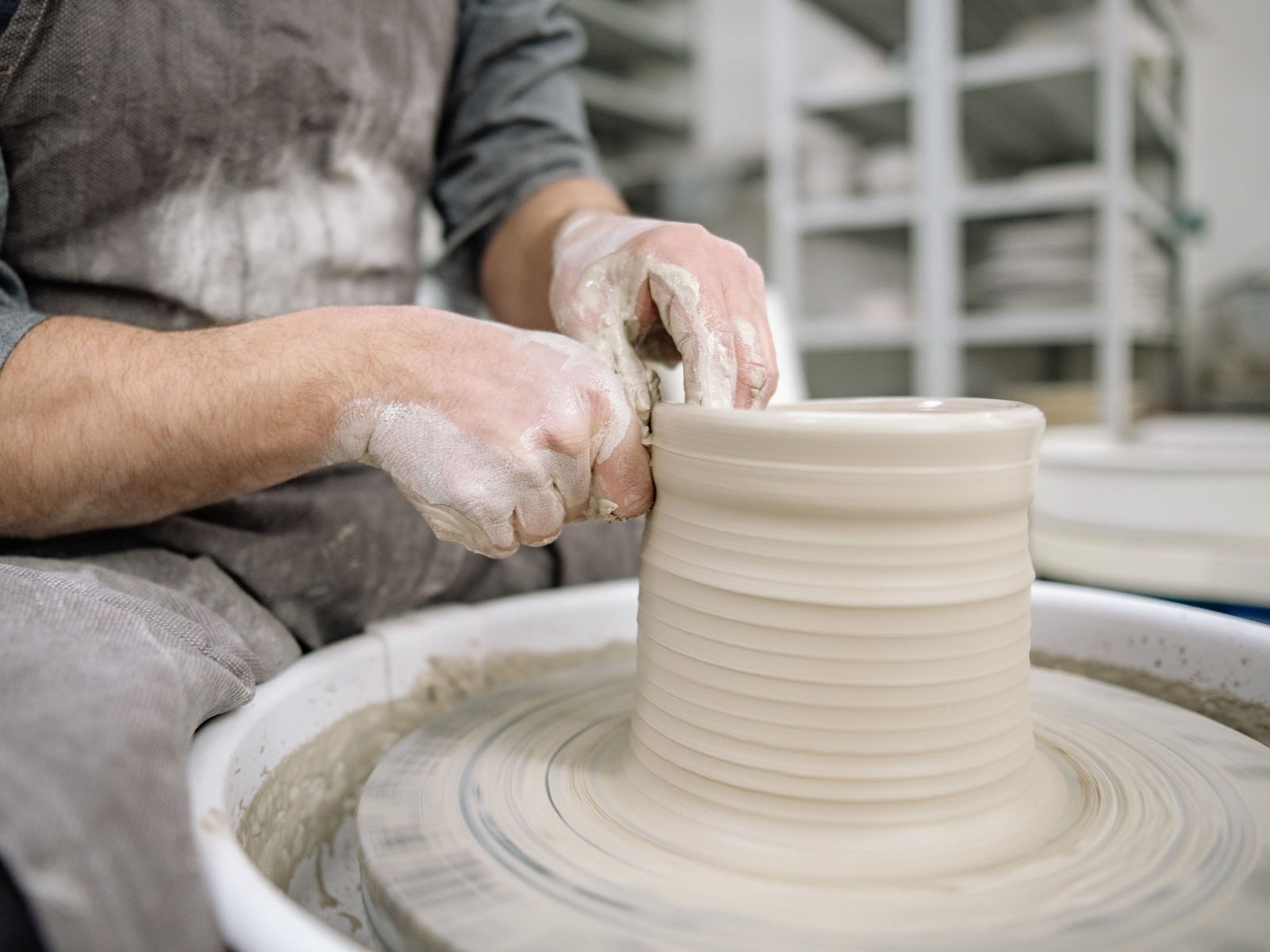
A mug looks simple. It still takes about three weeks, because clay cannot be hurried. Here is the short version of how ours are made.
Wedging
Clay arrives in a block. Before it is used, it is cut, folded and pressed, like bread dough, to push out the air and make it even. Air left inside can crack a mug in the kiln, so this step is never skipped.
Throwing
A ball of clay goes in the center of the wheel. With wet hands, the potter opens it, pulls up the wall and shapes the curve. The handle is pulled from a separate piece of clay and attached once the mug has stiffened a little.
Drying and trimming
The mug dries slowly for several days, away from drafts. When it is firm but not hard, it is turned over and trimmed at the base to make a foot. Dry it too fast and it warps or cracks.
The first firing
When the clay is bone dry, the mug goes into the kiln for its first firing, up to about 1000 °C. It comes out hard and pale, but still porous. This stage is called bisque.
Glaze and the second firing
The mug is dipped in glaze, wiped clean at the foot and fired again, hotter, to about 1250 °C. The glaze melts into a layer of glass and the clay turns dense and strong. Every kiln load is a little different, so no two mugs match exactly.
About three weeks, start to finish
- Days 1 to 2. Wedge, throw and add the handle.
- Days 3 to 8. Dry slowly, then trim.
- Days 9 to 12. First firing, then two days to cool.
- Days 13 to 19. Glaze, second firing, then a slow cool.
- Days 20 to 21. Unpack, check, sand the foot and wrap.
Then it comes to you, to be used every day.
Comments (0)
No comments yet. Be the first!